
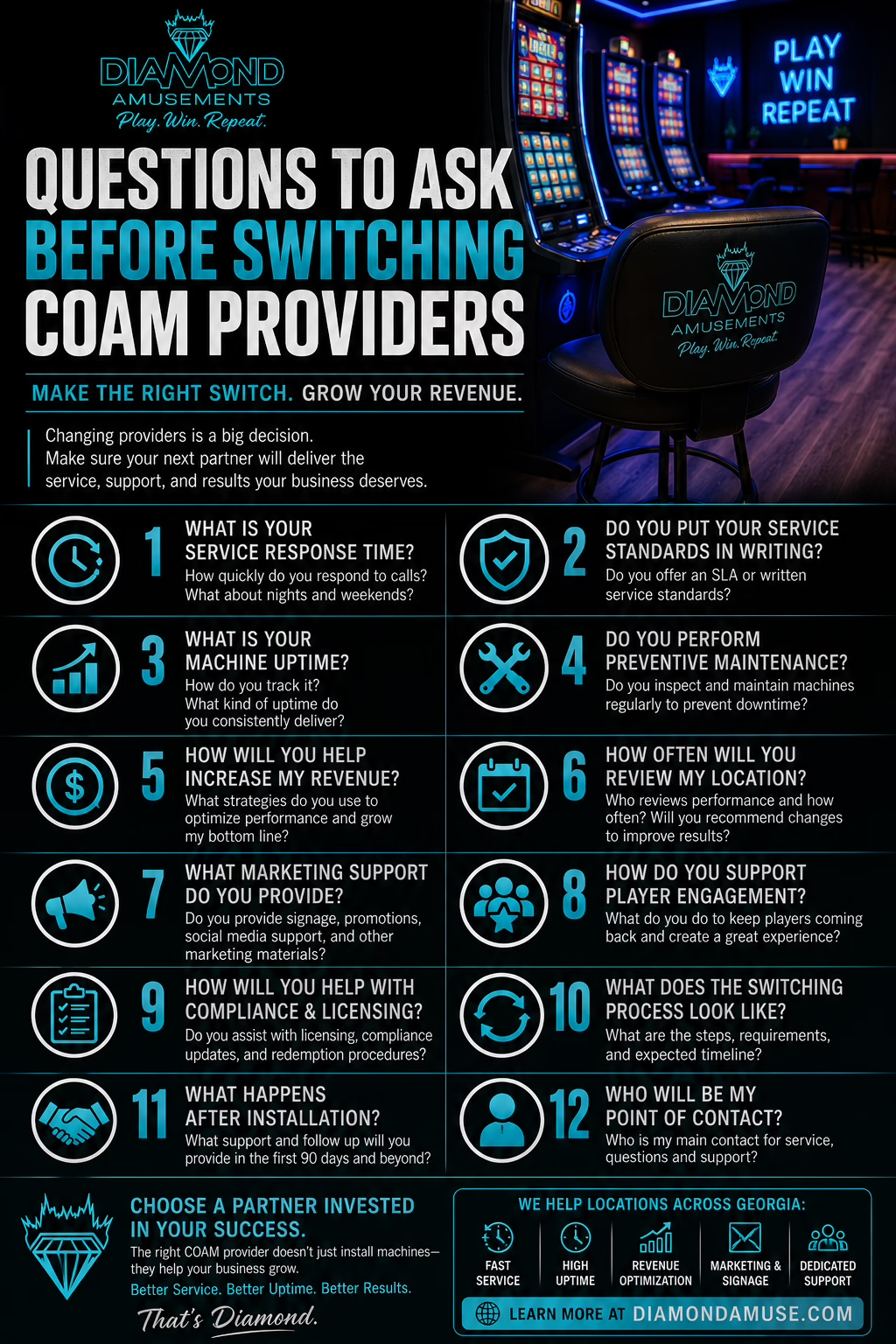
Before You Switch, Make Sure You’re Switching for the Right Reasons
If your current COAM provider isn’t delivering the service, support, or performance your location needs, switching providers may be worth considering.
But choosing a new provider shouldn’t simply come down to who promises the newest machines or the biggest revenue increase.
A COAM agreement is a long-term business relationship. Before making a change, Georgia location owners should understand exactly what the new provider will do differently after the contract is signed and the machines are installed.
Here are the questions we believe every business owner should ask before switching COAM providers.
1. What Is Your Service Response Time?
Start here.
A COAM machine only generates revenue when it’s operational. When equipment goes down, response time matters.
Ask a potential provider:
- How quickly are service calls acknowledged?
- How quickly can a technician typically arrive?
- Is service available after normal business hours?
- What happens on weekends?
- How are urgent problems escalated?
Don’t settle for “we have great service.”
Ask how they actually deliver it.
Related Article: Why Machine Uptime Matters
2. Do You Put Your Service Standards in Writing?
Promises made during a sales presentation are easy.
Written commitments are different.
Ask whether the provider offers a Service Level Agreement (SLA) or other written service standards.
An SLA can establish expectations surrounding areas such as response times, uptime, maintenance, and accountability.
A provider willing to put service expectations in writing is giving you something measurable to evaluate.
3. What Is Your Machine Uptime?
Don’t just ask how quickly machines get repaired.
Ask how often they need repair in the first place.
Machine uptime is one of the most important operational metrics in a COAM room because downtime can mean lost playing opportunities and lost revenue.
Ask:
- Do you track uptime?
- How is uptime measured?
- What happens when a machine has recurring problems?
- How quickly are chronic issues addressed?
Related Article: How Downtime Kills COAM Revenue
4. Do You Perform Preventive Maintenance?
There’s a major difference between repairing machines and maintaining machines.
Reactive providers wait until something breaks.
Proactive providers work to identify issues before they cause downtime.
Ask whether technicians routinely inspect:
- Bill validators
- Ticket printers
- Touchscreens and buttons
- Cooling systems
- Communication connections
- Power components
- Cabinet condition
Preventive maintenance helps protect both uptime and the player experience.
Related Article: Why Preventive Maintenance Matters
5. How Will You Help Increase My Revenue?
Be cautious of anyone who simply promises:
“We’ll make you more money.”
Ask them to explain how.
A strong provider should be able to discuss strategies involving:
- Machine utilization
- Game mix
- Room layout
- Player engagement
- Marketing
- Signage
- Uptime
- Redemption experience
- Performance reviews
Revenue growth should come from a strategy—not a promise.
6. How Often Will You Review My Location?
Installation shouldn’t be the end of the relationship.
It should be the beginning.
Ask:
- Who reviews machine performance?
- How frequently is my location evaluated?
- Will someone recommend game changes?
- Will someone evaluate the room layout?
- What happens if revenue begins declining?
- Who is responsible for helping improve performance?
Your provider should be paying attention before you have to call and ask why numbers are down.
7. What Marketing Support Do You Provide?
A great gaming room doesn’t help much if customers don’t know it’s there.
Ask whether your provider assists with:
- Exterior signage
- Interior signage
- Window graphics
- Social media
- Promotional materials
- Player engagement
- Grand openings
- Location-specific marketing
A COAM provider should be thinking about how to drive players into the room—not simply how to put machines in it.
Related Article: Why Signage Matters in COAM Rooms
8. How Do You Support Player Engagement?
Getting someone to play once is different from creating a repeat customer.
Ask what the provider does to help improve the overall player experience.
That may include:
- Room optimization
- Signage
- Promotions
- Reliable equipment
- Easy redemption
- Marketing
- Performance analysis
The goal should be to create an experience that gives players a reason to return.
Related Article: How to Improve Player Engagement
9. How Will You Help With Compliance and Licensing?
Georgia’s COAM industry is regulated, and compliance should never be an afterthought.
Ask a prospective provider:
- Who assists with licensing?
- Who handles questions during the application process?
- How do you communicate regulatory changes?
- How do you assist with compliant redemption procedures?
- Who does the location contact when a compliance question arises?
Your provider should be a resource—not another source of confusion.
10. What Does the Switching Process Actually Look Like?
This is one of the most important questions.
Before signing anything, understand:
- Your responsibilities to your current provider
- Your existing agreement
- Required notices
- Licensing requirements
- Equipment removal
- New equipment installation
- Expected timeline
A reputable provider shouldn’t encourage you to ignore an existing contract.
Instead, they should help you understand the process and plan an orderly transition based on your circumstances.
11. What Happens After Installation?
This question can reveal a lot.
Ask:
“What will you do for my location during the first 90 days?”
A strong provider should have an answer.
The first several months should involve evaluating:
- Machine performance
- Player activity
- Room setup
- Signage
- Redemption
- Marketing
- Service issues
- Revenue trends
Installing machines is easy.
Improving a location after installation is where a provider proves its value.
12. Who Will Be My Point of Contact?
You shouldn’t have to figure out who to call every time you need something.
Ask whether you’ll have a dedicated account manager or another primary point of contact.
You should know who is responsible for:
- Your relationship
- Performance questions
- Service escalation
- Marketing needs
- Equipment changes
- Growth opportunities
Accountability matters.
Don’t Compare Promises. Compare Performance.
When considering a new COAM provider, don’t make the decision based on one sales pitch.
Compare:
Service. Uptime. Maintenance. Marketing. Compliance. Communication. Accountability. Strategy.
And most importantly, ask:
“What are you going to do differently for my business?”
The answer should be specific.
Frequently Asked Questions
Can a Georgia business switch COAM providers?
The ability and process to switch can depend on the location’s existing contractual obligations, licensing status, and applicable Georgia requirements. Review your current agreement and the required process before making a change.
Should I switch providers just because another company promises higher revenue?
Revenue potential matters, but it shouldn’t be the only consideration. Service, uptime, maintenance, marketing, compliance support, and ongoing optimization can all affect long-term performance.
What should I look for in a new COAM provider?
Look for measurable service standards, reliable uptime, preventive maintenance, ongoing account management, marketing support, compliance knowledge, and a clear revenue optimization strategy.
What should happen after new COAM machines are installed?
The provider should continue monitoring performance, service, player engagement, machine mix, marketing, and overall room performance rather than disappearing after installation.
Considering a Switch? Talk to Diamond Amusements.
At Diamond Amusements, we believe locations should expect more from their COAM provider than machines on the floor.
We focus on:
- Fast, reliable service
- Preventive maintenance
- High uptime
- Revenue optimization
- Marketing and signage
- Player engagement
- Compliance support
- Dedicated account management
- Long-term location growth
If you’re questioning whether your current COAM relationship is delivering everything it should, we’re happy to have a conversation.
No pressure. No empty promises. Just an opportunity to compare.